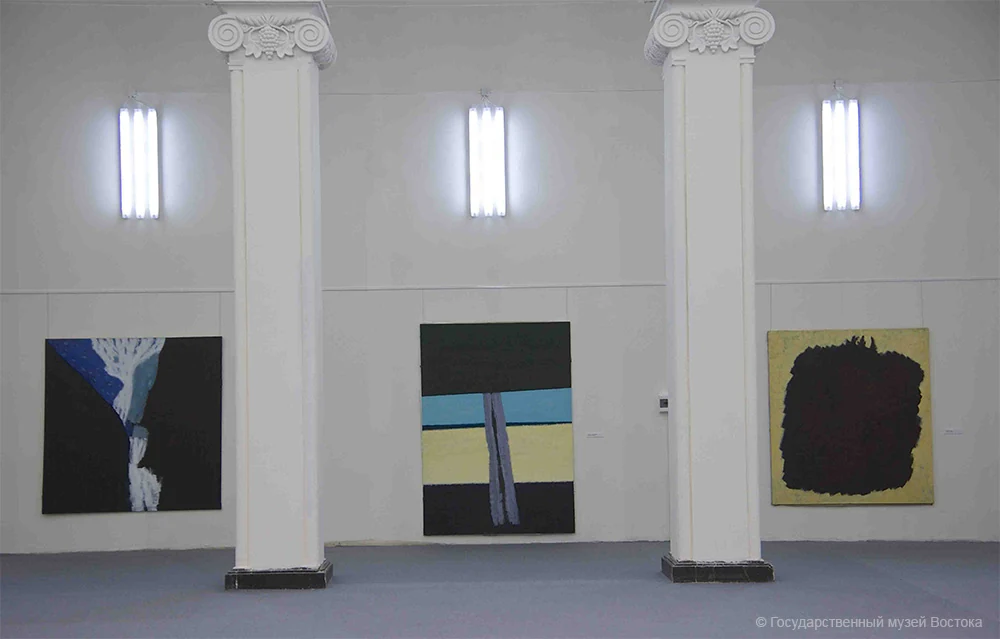
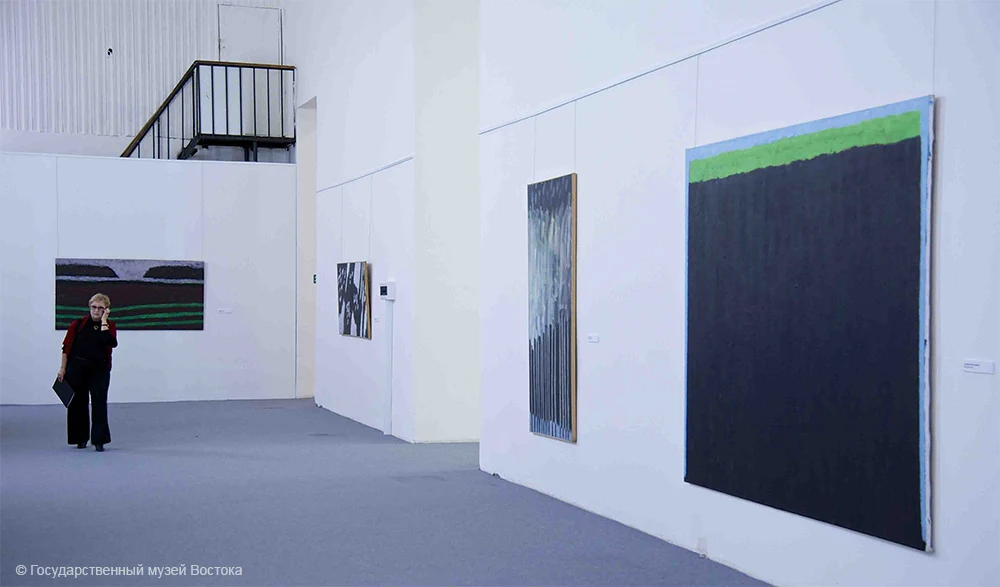
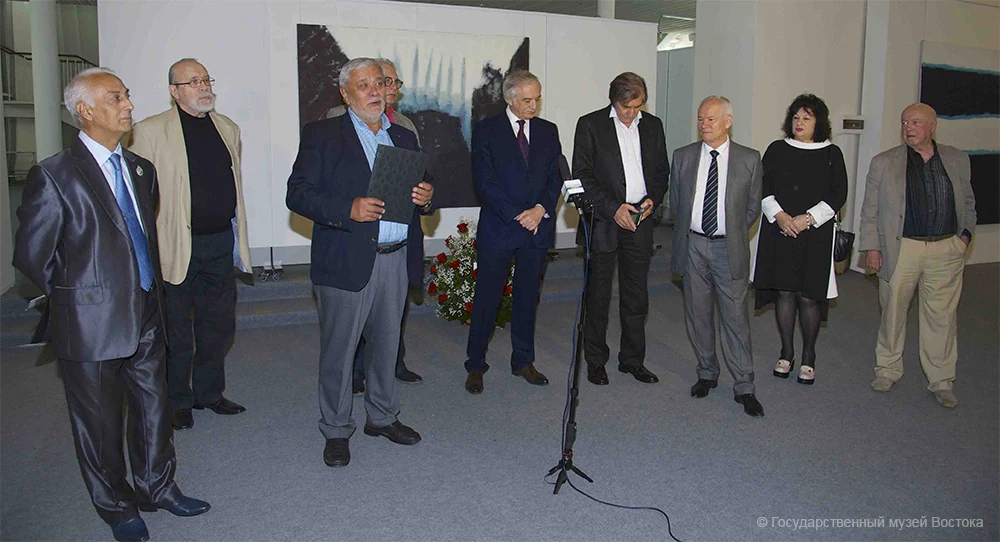
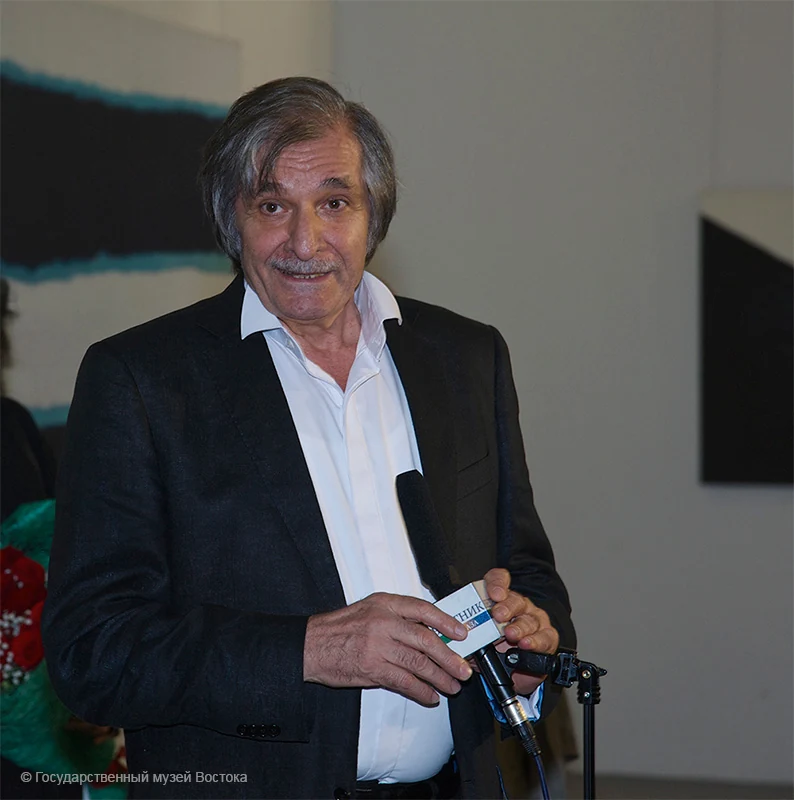
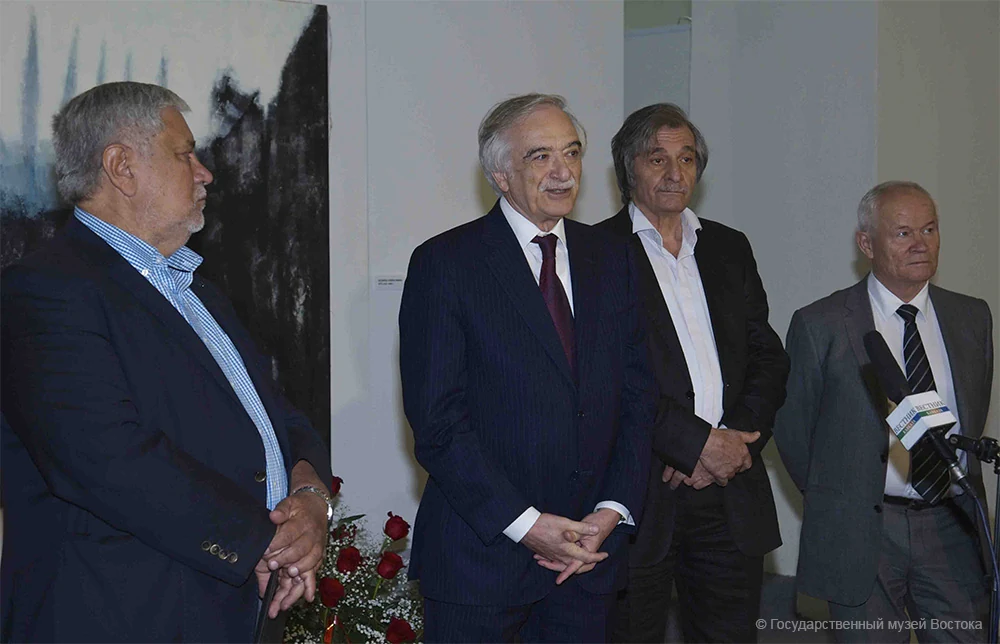
Presented in two consecutive parts in Moscow, Meeting brought together different periods of Farhad Khalilov’s artistic practice. Conceived in connection with the artist’s seventieth anniversary, the project was organised by the State Museum of Oriental Art across two venues, each offering a distinct perspective on his painting.
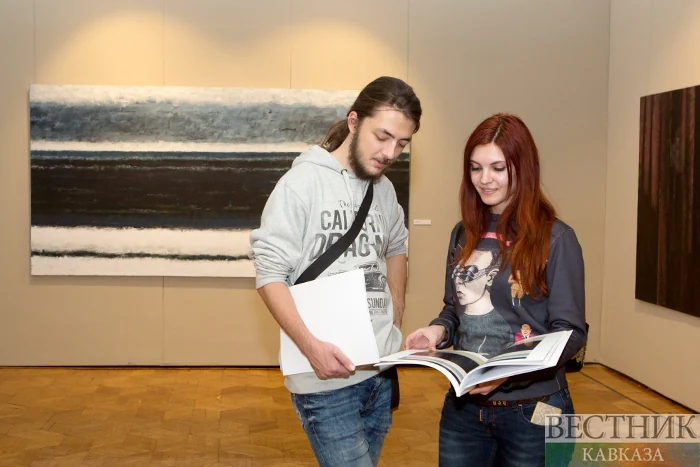
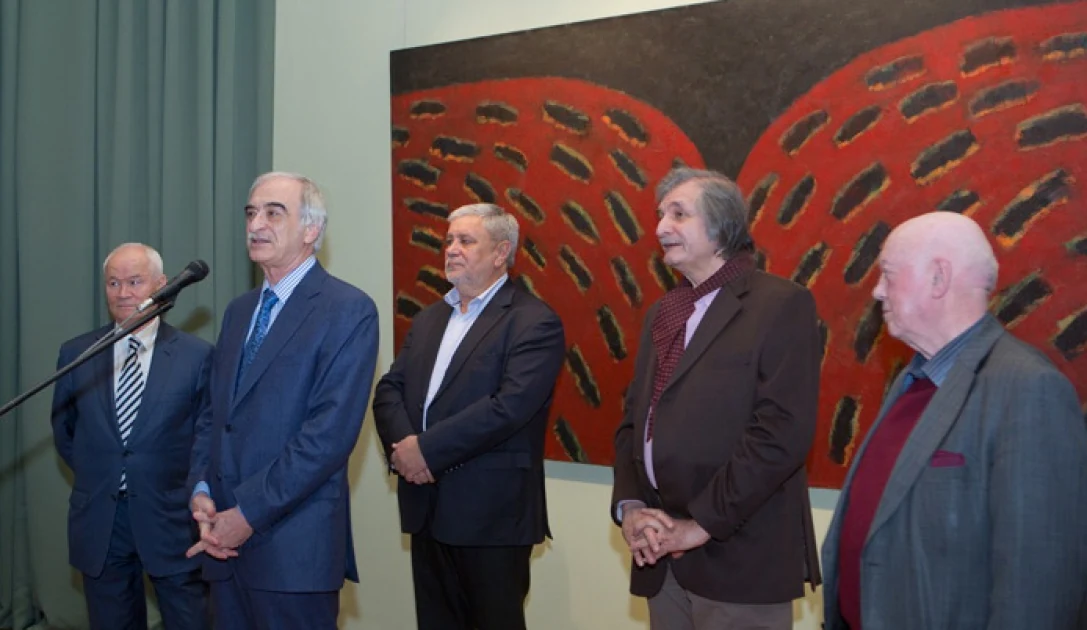
The first part took place at Pavilion No. 13 at VDNKh, where approximately fifty large-scale canvases from recent decades were presented. Paintings from Meeting, Unexpected View, Earth Patterns and Recollection explored an increasingly distilled language, in which the landscape of Absheron emerged through colour, rhythm and elementary forms.
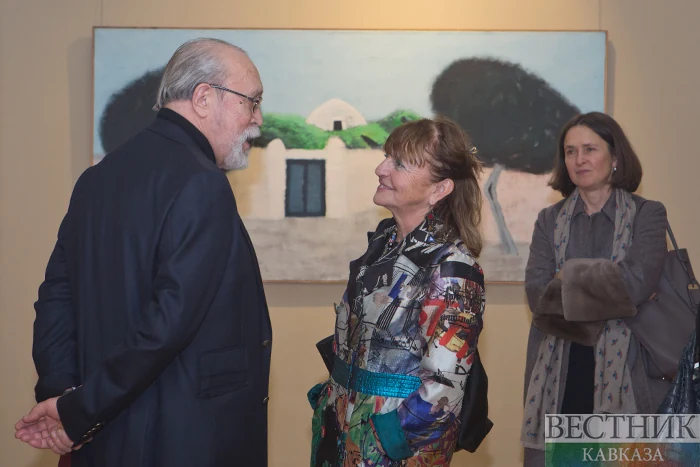
The second part opened in November at the museum’s historic building on Nikitsky Boulevard. Bringing together approximately fifty paintings, principally from 1970 to 2000, it traced earlier phases of Khalilov’s development. Village streets, the Caspian Sea, trees and the architecture of Absheron appeared as recurring motifs, revealing the gradual transformation of observed landscapes into autonomous pictorial structures. Contemporary reports record that some works were shown publicly for the first time.
The project’s structure also responded to the paintings’ scale. Museum director Alexander Sedov explained that the monumental canvases could not be shown to advantage in the rooms on Nikitsky Boulevard. The more expansive VDNKh pavilion offered a suitable setting for these works, while the historic museum housed the complementary earlier selection. Together, the two presentations revealed the continuity of a practice that transformed an enduring engagement with place into a language of colour, space and form.